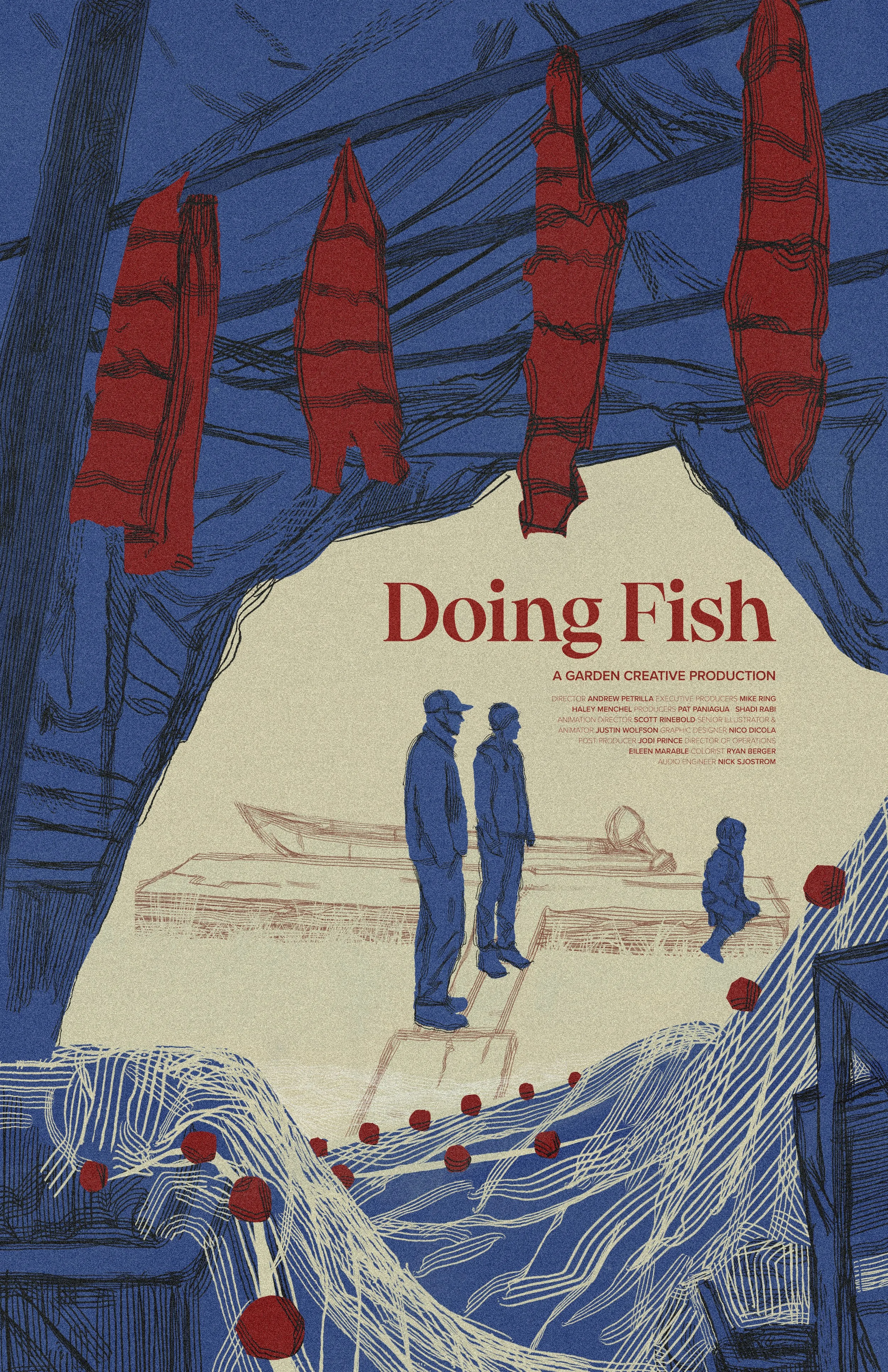
As salmon vanish from Alaska's Kuskokwim River, Indigenous fishing families fight to put food on the table and preserve a culture rooted in the river.
About the Film & Director
The Story
In southwestern Alaska, Yup’ik, Cup'ik, and Athabaskan families living on the Kuskokwim river set up camp to do what they’ve done every summer for thousands of years: fish for salmon. The health of salmon means the health of ecosystems, economies, and the health of Indigenous communities. The summer catch made by subsistence fishing is not only a means of food for survival…it’s a way of life…and it’s in crisis. In the last two decades, salmon runs of chinook and chum salmon are in steep decline, with many tribal communities unable to catch a single salmon. Why? The answer to this question seems to swim in murky waters: a combination of climate change, trawling operation bycatch, and state & federal management policies & restrictions. With climate change being the hardest to tackle, the other more controllable sources of the issue, trawling and management practices, are at the center of debate. It’s a problem being addressed in courts, public hearings, and boardrooms, but this documentary narrows its focus on the lives of those most affected, by documenting the day-to-day of a few Yup’ik subsistence fishing families over the course of two weeks in the summer, at the peak of the salmon run.
Director’s Statement
I am drawn to stories rooted in people’s relationship with the environment, and how it is an essential part of their lives and identity. This film grew out of my connection to the Yukon-Kuskokwim Delta through family who live in Bethel, Alaska. I began learning about the salmon decline on the Kuskokwim River and the profound impact it was having on their community, particularly Indigenous subsistence fishermen. After building relationships with local fishing community leaders, some of whom are featured in this film, it became clear that this was not simply a story about an ecosystem in decline. It was a story about families and their connection to one another, to generations before them, and to the fish that have sustained their communities. The salmon crisis is enormous in scope. But I wanted to tell a more intimate story: to spend time with families during their narrow window to fish for salmon. I wanted audiences to feel as though they were welcomed into fish camp for two weeks of an Alaskan summer, connecting with the fathers, mothers, sons, and daughters whose lives are deeply tied to the salmon.
Director, Andrew Petrilla
Director Bio
Andrew is a filmmaker based in Asheville, North Carolina, with close family ties in Bethel, Alaska. His work specializes in documentary & story-driven branded content, directing various mini-docs & commercials for The New York Times over the years. This film, Doing Fish, is his first feature film. Currently, he works as Creative Director for The Garden Creative, the production company that produced this film.
The People
The Alexie Family (Lower River)
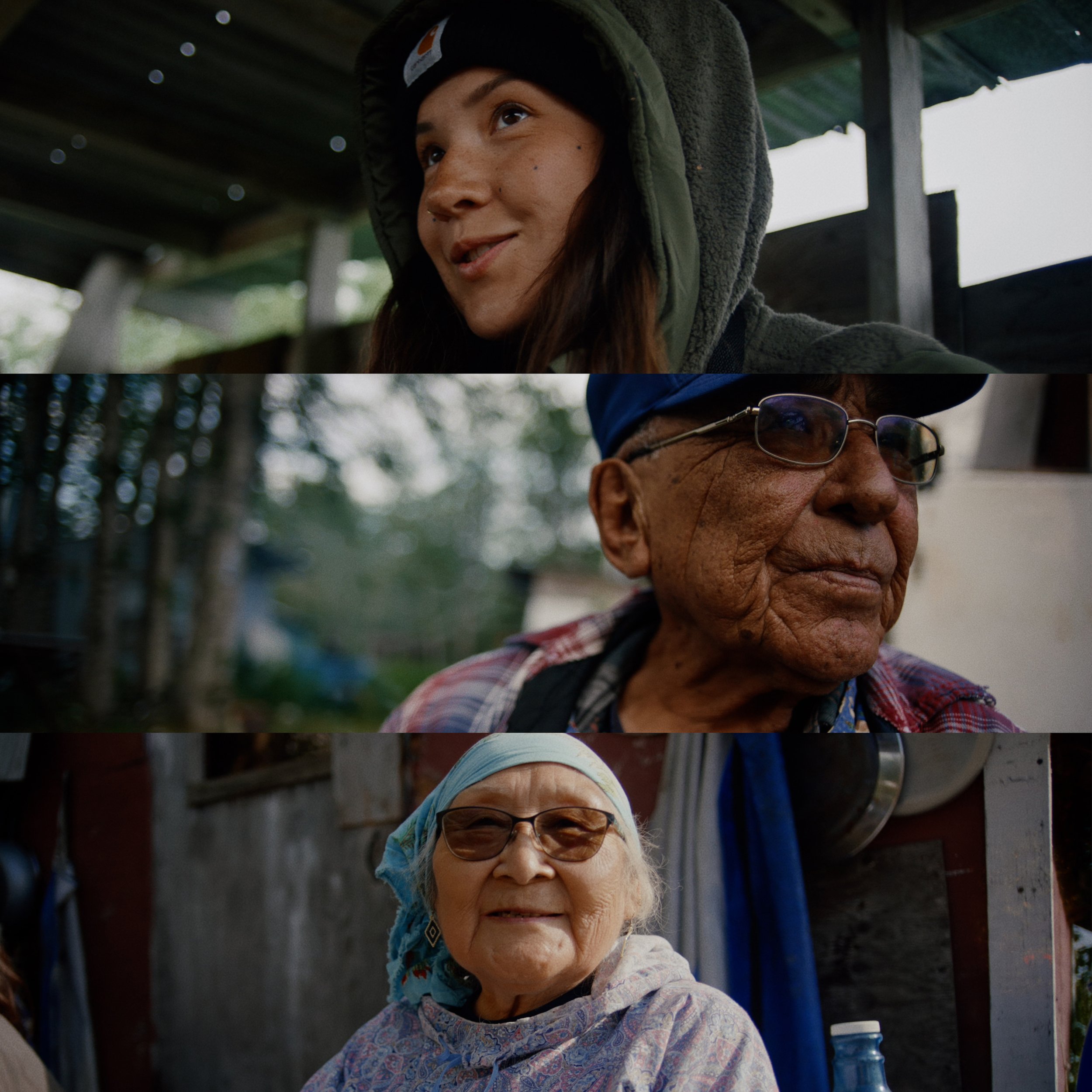
Travelling from Bethel up to their fish camp on the Kwethluk Y, Roy and Ida Alexie (bottom) work together every summer to harvest salmon for their multi-generational family. Their granddaughter, Leona (top) has learned everything she knows about fishing from her grandparents, and wants to continue passing down that knowledge to her children.

The Andrew Family (Lower River)
Residents of the village of Kwethluk, Martin and his wife Joy, both fish for salmon no matter the restrictions or how long they have to wait for the river to open. Martin serves as a commissioner for the Kuskokwim River Inter-Tribal Fish Commission, working to provide fishing opportunities for the people on the river and bring Indigenous knowledge into the decision-making of conserving salmon.
Bethel Residents (Lower River)
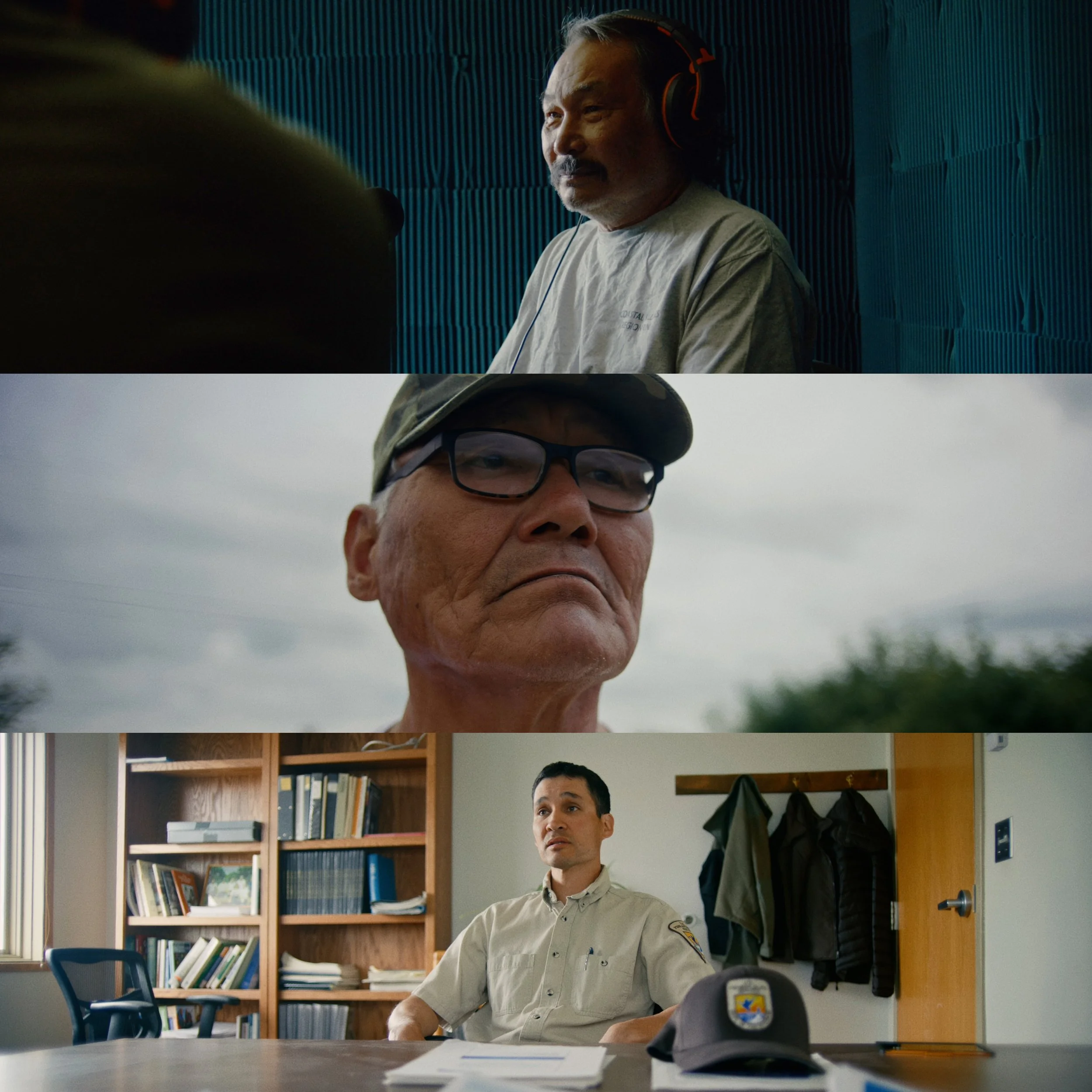
Sam Berlin (top) is a Yup'ik-language radio host for KYUK, the oldest Native owned public broadcasting station in the US. He serves as a vital source of fishing updates for the villages along the river. Evon Waska (middle), a Bethel fisherman, speaks up often to authorities and decision-makers to fight for the rights of his people to fish. Spencer Rearden (bottom), is the refuge manager for the Yukon Delta National Wildlife Refuge, collaborating with the Kuskokwim River Inter-Tribal Fish Commission to set regulations to conserve salmon on the federally managed parts of the river.
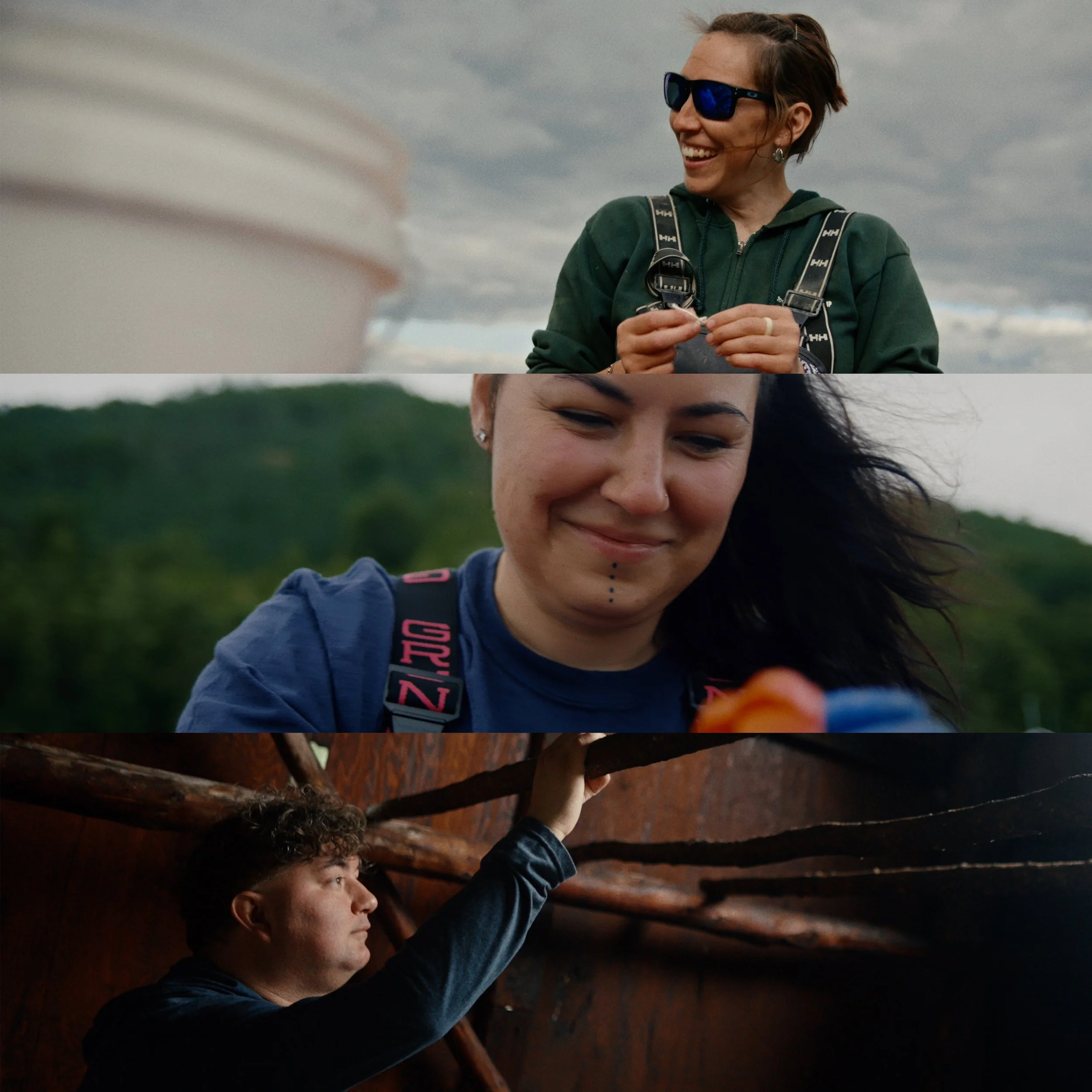
Middle River Families
Most of our story on the middle river takes place in Napaimute, where sisters Megan Leary and Audrey Lang (top) grew up harvesting salmon. Now, Megan has built her own fish camp from scratch, giving her sons the opportunity to learn the practices that are at risk of being lost. She also works together with in-season managers on the Inter-Tribal Fish Commission to make challenging decisions for the good of the entire river. Audrey, living in Napaimute, is passionate about preserving the history and traditions of their small village. Jonathan (bottom), 2024 chair of the Inter-Tribal Fish Commission, revisits his home of Georgetown every summer to fish with his family. He serves as a passionate voice for the Yup’ik, Cu’pik, and Athabaskan people living along the Kuskokwim - advocating for Indigenous stewardship of the river and its salmon.
Credits
Director, Editor, Director of Photography - Andrew Petrilla
Executive Producers - Michael Ring, Haley Menchel
Producers - Pat Paniagua, Shadi Rabi, Andrew Petrilla
Animation Director - Scott Rinebold
Production Sound Mixer - Pat Paniagua
Senior Illustrator & Animator - Justin Wolfson
Graphic Designer - Nico DiCola
Colorist - Ryan Berger
Audio Engineer - Nick Sjostrom
Post Producer - Jodi Prince
Director of Operations - Eileen Marable
Special Thanks to:
The Kuskokwim River Inter-Tribal Fish Commission
KYUK
Yukon Delta National Wildlife Refuge
The Kuskokwim Corporation
Clean Cuts Studio & Paul Perret
Songs
Yuraryuggtua (Let's Dance)
Music: Byron Nicholai